
Is One Month in Europe Long Enough? Here’s What We Learned

We spent our first month-long stay in Europe in Granada, Spain. We’d been traveling to Europe for decades, but until then, our trips had been traditional vacations: hotels, sightseeing, restaurants, and all the usual tourist activities.
Spending an entire month in one place? That was new territory. And frankly, despite being travel industry professionals for 40 years, we were a little clueless about how the whole thing was supposed to work.
Between the weather, the house we’d rented, and a few adventures involving our landlady, that first month wasn’t exactly smooth sailing.
But somehow, February flew by. Suddenly it was March, we were back home, and we wanted more. Not necessarily more Granada. We’d had enough Granada for the moment, thank you very much. LOL.
But what about the next place? And the next? And the next?
That first month changed the way we thought about traveling. We discovered that we loved having a temporary home somewhere in Europe, even if it came with a few surprises.
Eventually, our month-long stays became two-month trips, and these days we generally spend close to three months in Europe each year, and are secretly scheming about ways to make it longer.
Is one month in Europe long enough?
Yes! One month is enough time to settle into a European city, enjoy a slower pace of travel, and discover whether extended stays are right for you. After starting with a month in Granada, Spain, and eventually extending our trips to nearly three months, I still recommend a month as an excellent starting point. The ideal length of stay depends on your travel experience, comfort level, and what you want from the trip.
Our First Month in Europe Changed How We Travel
Before Granada, we’d spent decades visiting Europe as tourists. We’d stay in hotels, visit the sights, eat in restaurants, and move on to the next destination. We often went several times a year, but rarely stayed for longer than 2 weeks.
And don’t get me wrong. I still love a good hotel. Preferably a very nice one. LOL.
But renting a house in Granada for an entire month introduced us to a different way of experiencing Europe. Suddenly, we weren’t just asking which attractions we wanted to visit or where we should go for dinner.
We had other questions. Where was our local supermarket? Which cafés would make good temporary offices? Would we get to know any of the neighbors at the local bar? You know, the important stuff.
Instead of planning every day around sightseeing, we could simply enjoy being there. Some days we’d explore. Other days we’d work, go grocery shopping, or head out for coffee without any particular agenda.
We weren’t trying to become locals, and we certainly weren’t pretending we’d moved permanently to Spain. We just enjoyed having a little everyday life in another country.
And because we were self-employed, we discovered that working from Europe was surprisingly manageable. We could keep our mornings free and work later in the day when our customers back in the United States were available.
It was a pretty appealing arrangement.

That first month taught us something we hadn’t fully appreciated during all our previous European vacations: travel didn’t have to mean taking a break from our regular lives. We could temporarily take our lives somewhere else.
And once we’d discovered that possibility, it was hard not to start wondering where else we could do it.
What a Month in Europe Actually Gives You
One of the nicest things about spending a month in Europe is that you don’t have to treat every day like a vacation day. Have you ever felt exhausted on a vacation where you feel compelled to see everything? Yep, me too.
On a typical week-long trip, there’s often that nagging feeling that you should be doing something. There’s a museum you haven’t visited, a neighborhood you haven’t explored, or a restaurant someone insisted you absolutely must try. And the clock is ticking.
With a month, you have room to slow down.
You can spend a morning wandering around without a destination. You can return to a café you particularly liked instead of constantly searching for somewhere new. You can take a day trip because the weather looks beautiful, or stay home because it doesn’t.
And yes, you can spend an afternoon doing absolutely nothing without feeling that you’ve wasted precious vacation time. Imagine that!
You Have Time to Develop a Routine
This was one of the biggest differences we noticed.
When you’re staying in an apartment or house for a month, ordinary activities become part of the experience.
You figure out where to buy groceries, discover your favorite bakery, and find the places you enjoy returning to. You might even become a familiar face at the neighborhood café.
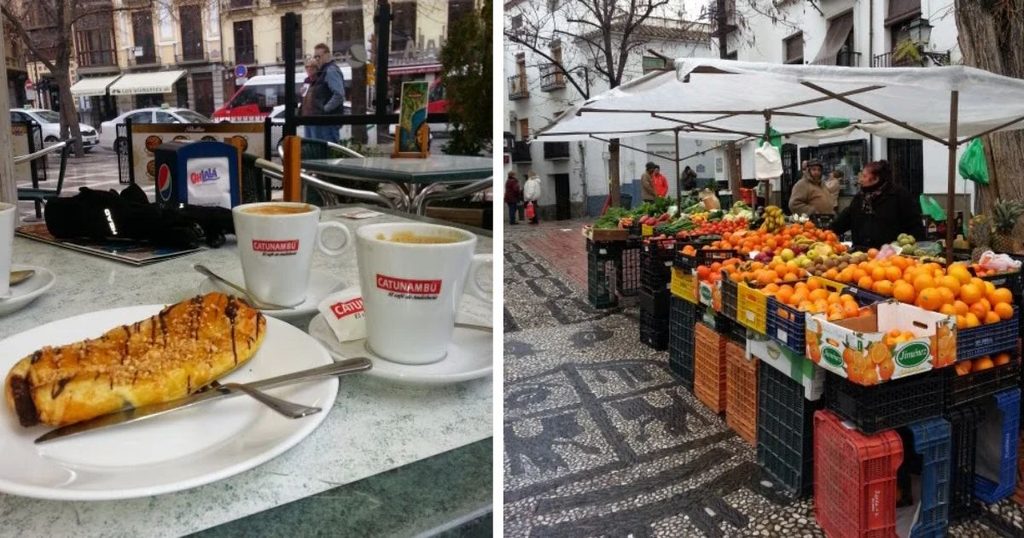
It’s not quite living abroad, but it’s certainly different from checking into a hotel for three nights.
You Can Explore Beyond the Usual Tourist Attractions
A month also gives you more opportunities to discover places you might otherwise miss.
Instead of concentrating entirely on the major sights, you can explore different neighborhoods, visit nearby towns, or take a train somewhere simply because it looks interesting.
And you don’t have to cram all those outings into a rigid schedule.
That’s one of the things we love about choosing European cities with good public transportation and train connections. We can enjoy our home base while still having plenty of opportunities to explore.
You Find Out Whether This Kind of Travel Suits You
And perhaps most importantly, a month gives you a chance to discover whether you actually enjoy extended stays. Because not everyone does.
Some people love having a temporary home, shopping for groceries, and settling into a routine. Others discover that they miss their own home, prefer hotels, or simply don’t enjoy being away for that long. Neither reaction is wrong.

A month is a meaningful commitment, but it’s also a manageable way to experiment with a different style of travel before deciding whether you’d like to do it again.
For us, that first month answered the question pretty decisively. We wanted another one. And then another. Apparently, we’d found ourselves a new habit. LOL.
Why We Eventually Started Staying Longer
After Granada, deciding to extend our next trip to two months wasn’t particularly difficult.
We were already self-employed, and we’d discovered that working from Europe was surprisingly easy for us. In fact, we rather liked the arrangement. We could enjoy our mornings exploring, sightseeing, or lingering over coffee, then work later in the day when our customers back in the United States were available.
But there was another reason we wanted to stay longer. We wanted two home bases instead of one.
We loved the idea of settling into a city for a while, but we also wanted variety. There were too many places we wanted to experience to spend the entire trip in one location.
And squeezing two month-long stays into a one-month trip presents certain mathematical difficulties. So we started spending two months in Europe, choosing different cities as our bases.
If you’re trying to decide whether to settle into one city or divide your time between several, I’ve written more about how we choose between one base and several for our extended stays in Europe.
It turned out to be a wonderful combination. We could enjoy the everyday routines we’d come to appreciate while also experiencing two very different places on the same trip.
Eventually, we started stretching our trips even further. With nearly three months available, we had room for more than just our extended stays. We could take weekend trips, welcome friends or family who wanted to join us for a week or two, and sometimes (well, OK, always) try and finish the whole adventure with a European river cruise.
And trust me, after weeks of grocery shopping and doing our own laundry, having someone else cook, clean, and generally take care of us on a riverboat is not exactly a hardship.
We’ve also discovered that returning to a favorite place doesn’t mean giving up the excitement of somewhere new.
Girona, Spain, for example, has become one of our favorite places to return to. But we always combine familiar destinations with new ones. There’s simply too much of Europe we haven’t seen yet.
That’s really why our trips kept getting longer. It wasn’t because a month had somehow become inadequate. We still think a month is a terrific length of time for an extended stay.
We just discovered that having more time gave us more choices.
More places to explore. More opportunities to revisit old favorites. More flexibility to spend time with friends, take side trips, or occasionally indulge in a lovely hotel or river cruise. And more seasonal weather changes, too.
And after decades of taking traditional European vacations, we found that this combination of settling in and moving on suited us beautifully.
When One Month in Europe is Enough
As much as we love our extended stays, I wouldn’t automatically recommend that someone planning their first long trip to Europe jump straight into a two- or three-month adventure.
In fact, I think one month is an excellent place to start.
It gives you enough time to experience a different style of travel without making an enormous commitment before you know whether you’ll enjoy it. And believe me, not everyone does.
Years ago, I had some travel agency clients who decided they were going to spend four months in Europe. Four months! And if I remember correctly, they hadn’t even traveled to Europe before.
Their plan was to spend three months in the Schengen Area, followed by another month in the UK. They had a rough idea of where they wanted to go, but they didn’t want to book their accommodations in advance.
They were going to wing it. A grand adventure!
They came to me for advice about a few travel arrangements, but otherwise they were determined to handle everything themselves.
Well, off they went. And approximately three weeks later, they were home.
They’d become homesick, struggled with figuring out where to stay, and found the whole experience far more uncomfortable than they’d anticipated. Apparently, four months sounded considerably better from the comfort of their own living room. LOL.
Now, I don’t tell that story to suggest they were wrong to dream big. I tell it because the length of trip that sounds wonderful in theory isn’t necessarily the length you’ll enjoy in practice.
Some people love having a temporary home in another country. Others discover that they miss their familiar surroundings, prefer shorter vacations, or simply don’t enjoy the uncertainty that can come with extended travel.
And your previous travel experience matters, too.
If you’ve traveled internationally for years, you may already be comfortable navigating unfamiliar cities, transportation systems, and cultural differences. If you’re relatively new to international travel, spending a month abroad can feel like a much bigger undertaking.
Your personal circumstances matter just as much. You might have family responsibilities, work commitments, pets, a limited budget, or simply no desire to be away from home for months at a time.
There’s also nothing wrong with discovering that you enjoy Europe more in smaller doses. A month isn’t a lesser version of a three-month trip. It’s a substantial travel experience in its own right.
And if you finish that month feeling satisfied and ready to go home, wonderful! If you finish it wondering where you can spend your next month, well, welcome to the club.
Just be warned. That particular habit can become rather addictive.
How to Decide How Long to Stay in Europe
So how do you figure out whether one month, six weeks, or three months is the right amount of time for you?
I wish I could give you a magic formula, but after years of extended stays in Europe, I’ve discovered that the answer depends on much more than how many days you can fit into your calendar.
Here are a few things I’d consider before booking that apartment for the next 90 days.
How Comfortable Are You Being Away From Home?
This might be the most important question of all.
And I say that as someone who has been traveling internationally for decades and still occasionally gets homesick.
Interestingly, I tend to feel it most at the beginning of a trip, when home still feels so close. Once we’ve been away for a few weeks and settled into our routine, I’m usually perfectly happy.
Having friends or family join us for part of the trip helps, too.
But sometimes homesickness creeps back in if we’re staying somewhere I don’t particularly like. And toward the end of a three-month trip, I occasionally find myself missing my regular home office and all the familiar comforts of home.
Unless I’m on a lovely river cruise or staying in a luxury hotel. Then, strangely enough, I’m perfectly capable of remaining abroad indefinitely. Make of that what you will. LOL.
The point is that homesickness isn’t always predictable, and it doesn’t necessarily mean extended travel isn’t for you.
How Important Is Your Accommodation?
For a short vacation, I can tolerate a less-than-perfect hotel room for a couple of nights. But when I’m renting an apartment for a month, I want to be comfortable. I’m going to be living there, working there, cooking there, and spending plenty of time doing ordinary everyday things.
The location matters. The furniture matters. The Wi-Fi matters. And yes, the bathroom definitely matters.
What you might overlook on a three-night stay can become a major annoyance over thirty nights.
If you’re considering your first extended stay, I’d put plenty of thought into choosing accommodations where you’ll actually enjoy spending time.
Do You Want One Home Base or Several?
This is another big consideration.
If your dream is to spend a month getting to know one European city, a month might be exactly what you need. But if you want to experience several different places without constantly packing and unpacking, you’ll probably want more time.
That’s one of the reasons our trips grew longer. We wanted the pleasure of settling in, but we also wanted variety.
For trips longer than a month, we generally choose more than one home base, sometimes adding shorter hotel stays or weekend excursions along the way.
Of course, every move comes with a little extra planning, packing, and travel time. More destinations aren’t automatically better.
Can Your Work and Budget Accommodate a Longer Stay?
We’ve been fortunate that our work has allowed us to travel for extended periods.
Being self-employed made it relatively easy to experiment with longer trips, and we found that working later in the day allowed us to stay available for our U.S. customers. But not everyone has that flexibility.
You may have a limited amount of vacation time, responsibilities that require you to be home, or a budget that makes one month more realistic than two.
And although renting an apartment for a month can sometimes offer better value than paying nightly hotel rates, staying longer doesn’t automatically make a trip cheaper. You’re still paying for accommodations, food, transportation, activities, and all the little expenses that add up.
Choose a length of stay that fits your actual circumstances, not someone else’s Instagram version of life abroad.
What Do You Want From the Experience?
Finally, ask yourself what you’re hoping to get out of the trip.
Do you want a break from your normal routine? A chance to experience everyday life in another country? Time to explore one region thoroughly? Or the freedom to visit several places without rushing?
Those are all perfectly good reasons to spend an extended period in Europe, but they may lead you to different decisions about how long to stay.
For us, the answer evolved over time.
We started with one month because we wanted to try something different. We moved to two months because we wanted two home bases. And eventually, we discovered how much we enjoyed having time for friends, side trips, old favorites, new destinations, and the occasional river cruise.
My advice? Plan the trip that makes sense for you now. You can always make the next one longer.
How to Make the Most of Your First Month in Europe
If you’re planning your first month-long stay in Europe, my biggest piece of advice is simple: don’t try to turn it into an ordinary vacation that happens to last 30 days.
The beauty of spending a month somewhere is having the freedom to do things differently.
Here are a few things I’d suggest based on our own experiences.
Choose a Place Where You’ll Enjoy Everyday Life
It’s tempting to choose a destination based entirely on its famous attractions. But when you’re spending a month somewhere, you need more than a list of things to see.
Think about what your ordinary days might look like. Can you walk to cafés, restaurants, and grocery stores? Are there neighborhoods you’d enjoy exploring? Can you get around easily without a car? Are there interesting places nearby for day trips?
Those things matter enormously to us. We particularly enjoy walkable European cities with interesting architecture, plenty of cafés, and good train connections. We never rent a car, so convenient public transportation is essential.
A city doesn’t have to be enormous or famous to make a wonderful home base.
Make Sure You’ll Be Comfortable in Your Accommodation
I can’t emphasize this enough.
When you’re staying somewhere for a month, your apartment or house isn’t simply a place to sleep. It’s your temporary home.
Think about the things that matter to you in your own home. Maybe it’s a comfortable place to sit, a proper kitchen, reliable internet, a washing machine, or a workspace.
And don’t underestimate the importance of location. An apartment that looks wonderful in photographs might lose some of its appeal if getting a cup of coffee requires a major expedition.
Personally, I’m rather particular about where I stay. All right, very particular. LOL. But I’ve learned that enjoying our accommodations makes a tremendous difference to how much I enjoy an extended trip.
Leave Plenty of Room for Unplanned Days
You don’t need to fill every day with activities. In fact, I’d encourage you not to.
Have a list of things you’d like to see and do, certainly. But leave room for spontaneous outings, lazy mornings, and those days when you simply feel like wandering around.
One of the pleasures of a longer stay is being able to say, “We can do that tomorrow, or never.” And actually mean it. I call this JOMO. The Joy of Missing Out.
Explore Beyond Your Home Base
One of our favorite things about extended stays is having time to visit nearby towns and cities.
A good rail connection can open up all kinds of possibilities, whether it’s a day trip, an overnight excursion, or a weekend somewhere different. You get the pleasure of having a familiar place to return to while still satisfying that urge to see what’s around the next corner.
And if you discover that you’d rather spend the afternoon at your favorite neighborhood café instead, that’s perfectly fine, too.
Don’t Expect Every Day to Be Wonderful
This might be the most important advice of all. Even after decades of traveling, we still encounter surprises. Some are delightful. Others, not so much.
The weather doesn’t cooperate. An apartment disappoints. Something doesn’t work the way you expected. You have an occasional day when you’d rather be sitting in your own living room. That’s normal.

Remember our first month in Granada? Between the weather, the house, and the landlady, it wasn’t exactly a flawless introduction to extended travel. And yet, it changed the way we traveled for years to come.
So don’t judge the entire experience by a difficult day or two. Give yourself time to settle in, figure things out, and discover what you enjoy about having a temporary home somewhere new.
And if you decide that one month was enough? That’s OK. There’s no requirement to become a three-month European wanderer just because you enjoyed spending February in Spain.
Frequently Asked Questions About Month-Long Trips to Europe
Is one month too long for a first trip to Europe?
It can be, especially if you’ve never traveled internationally or aren’t sure how comfortable you’ll be away from home. For first-time visitors, a shorter trip may be a better introduction. But if you’re already comfortable traveling in Europe and want to experience a slower pace, a month can be a wonderful starting point.
Should I spend one month in one European city or visit several?
For your first extended stay, I’d lean toward choosing one home base and exploring the surrounding area through day trips or occasional overnight excursions. You’ll spend less time packing, moving, and adjusting to new accommodations. If you want to experience several cities in depth, consider a longer trip with multiple bases.
Can you work remotely while spending a month in Europe?
It depends on the country you’re visiting, your citizenship, and the type of work you’ll be doing. Some countries offer visas specifically for remote workers, while others have restrictions on working during a tourist stay. Before planning a working trip abroad, check the current visa and work authorization requirements for your destination. The European Commission’s visa information is a useful starting point, but you’ll also need to check the specific country’s rules on remote work.
The Best Length of Stay Is the One That Works for You
Looking back, that first month in Granada was one of the most important travel experiences we’ve ever had.
Not because everything went perfectly. It certainly didn’t. And not because Granada was the one place we wanted to return to year after year. It was because spending a month there opened our eyes to an entirely different way of experiencing Europe.
We discovered that we could settle into a city, develop a few everyday routines, continue working, and still have plenty of time to explore. And once we’d tried it, we wanted to see where else that kind of travel might take us.
For us, one month eventually became two, and then nearly three. But that doesn’t mean three months is better than one. It just happens to be what works for us at this stage of our lives.
If you’re considering your first extended stay in Europe, I think a month is a wonderful place to start. You might come home completely satisfied, with wonderful memories and absolutely no desire to repeat the experience. Or you might find yourself doing what we did: looking at a map and wondering where you could spend your next month.
Either way, you’ll have learned something about the kind of travel you enjoy. And really, isn’t that part of the adventure?
The point isn’t how far you travel. It’s that you’re still going places.
